 Owned
Owned

Mon-Fri 9am - 5pm Mountain time
Cart reopens in October
Subscribe to our email list
to stay updated
Common Snowberry vs Twining Honeysuckle
Symphoricarpos albus
Lonicera dioica
NOT AVAILABLE THIS SEASON - MIGHT RETURN
(new stock expected: fall of 2027)
CUSTOM GROW
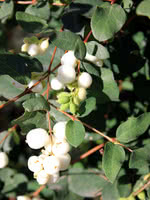
Common Snowberry is a small deciduous shrub with characteristic white to pink flowers and clusters of white fruit.
This North American native species is very adaptable, and can be used for erosion control in riparian and restoration areas. Snowberry's fruit attracts wildlife, and livestock can consume the berries without issue.
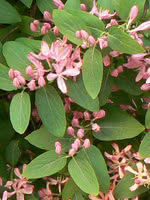
Twining Honeysuckle is a vine native to the forests of Canada and the United States.
It can often be found winding up the bark of large trees or spreading out as a ground cover where no supports are present. You will love the attractive, yellow-orange flowers with pink centers which turn into red, inedible berries.
Consider Twining Honeysuckle when trying to achieve a natural, spreading, unkempt look for your garden.
Common Snowberry Quick Facts
Twining Honeysuckle Quick Facts
Toxicity: berries toxic to humans