 Owned
Owned

Mon-Fri 9am - 5pm Mountain time
Cart reopens in October
Subscribe to our email list
to stay updated
Nanking Cherry vs Shiny Cotoneaster (Hedge Cotoneaster)
Prunus tomentosa
Cotoneaster lucidus
NOT AVAILABLE THIS SEASON - MIGHT RETURN
NOT AVAILABLE THIS SEASON - MIGHT RETURN
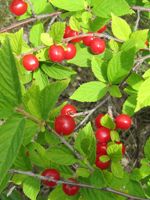
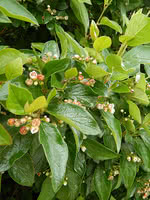
Nanking Cherry is a small deciduous shrub known for its attractive white blossoms and edible fruit. Its dark red berries are excellent for pies, jellies, and even fresh eating.
Nanking Cherry is highly regarded as a shade tolerant fruit. We often see it planted as a hedge on the north side of a house where few other plants will survive, let alone thrive.
Expect fruit mid to late July. The fruit can vary in sweetness and size considerably. We often hear that people prefer it to sour cherries. Perhaps this is because Nanking Cherry is more closely related to plums. In fact, it is sometimes used as a dwarfing rootstock for plums.
The Shiny Cotoneaster (Hedge Cotoneaster) is a dense, deciduous shrub that gets its name from the glossy dark green leaves that turn an eye-catching mix of red and purple in the fall.
It produces small, pink flowers in spring and by late summer they are followed by red berries that ripen to black. This plant is great for attracting wildlife as it is loved by both birds and butterflies.
While the Shiny Cotoneaster does produce berries, they are inedible to humans. This plant takes pruning and shearing well, making it easy to shape to your liking and is a great choice for a hedge or privacy screen in your yard.
Nanking Cherry Quick Facts
Shiny Cotoneaster (Hedge Cotoneaster) Quick Facts
Toxicity: may cause stomach upset