 Owned
Owned

Mon-Fri 9am - 5pm Mountain time
Cart reopens in October
Subscribe to our email list
to stay updated
Beedle Pear vs Debbies Gold Apricot
Prunus × Debbies Gold
Pyrus Beedle
COMING SOON
(new stock expected: fall of 2026)
NOT AVAILABLE THIS SEASON - MIGHT RETURN
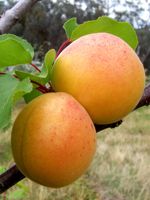
Debbie’s Gold Apricot is a cold-hardy variety known for its firm, sweet, and aromatic fruit. The white to pink flowers bloom several days later than other varieties, making them less susceptible to spring frosts. Their orange-yellow, freestone apricots ripen from late July to mid August and are well-suited for fresh eating, baking, canning, and preserves.
Debbie’s Gold Apricot is generally considered to be partially self-pollinating, but planting with another variety for cross-pollination can increase yields.
Note: While the bloom time is later than other varieties, the flowers are still vulnerable to spring frosts, which can reduce or eliminate the fruit crop.
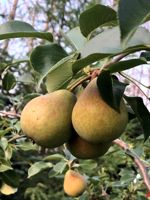
Beedle Pear is sweet, soft, and juicy with no astringency making it great for fresh eating. They typically ripen on the tree in early September. The medium-sized pears keep relatively well when compared to other varieties. For most years it is a reliable producer on the prairies.
The Beedle Pear is a cold hardy pear with Canadian roots. John Beedle discovered it on a city boulevard in St. Albert, Alberta.
For fruit production, another pear variety is required for cross-pollination. Can be paired with Krazulya Pear or Ussurian Pear.