 Owned
Owned

Northern Catalpa (Cigar Tree) vs Capilano Apricot
Prunus Capilano
Catalpa speciosa
NOT AVAILABLE THIS SEASON - MIGHT RETURN
NOT AVAILABLE THIS SEASON - MIGHT RETURN
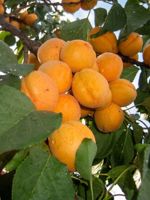
Capilano Apricot is a cold-hardy variety known for its sweet, juicy, full-flavored fruit. It produces white to pink blooms in early spring, before the leaves emerge, followed by golden-yellow, freestone apricots. They ripen from mid-July to early August and are well-suited for fresh eating, baking, wine, canning, and preserves.
The Capilano Apricot originated from three trees planted in Edmonton’s Capilano neighbourhood during the 1960s. As they began producing fruit, local fruit enthusiasts took notice and propagated the trees, with the southernmost becoming particularly popular. Though the original trees no longer exist, the Capilano Apricot remains a widely sought-after cold-hardy variety.
Capilano Apricot is generally considered self-pollinating, but planting with another variety for cross-pollination can increase yields.
Note: The early bloom time makes the flowers vulnerable to spring frosts, which can reduce or eliminate the fruit crop
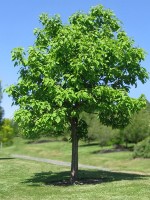
Northern Catalpa is a striking feature tree with showy flowers, and very large leaves. Its orchid-like flowers are white with yellow and purple accents, and they have a pleasant fragrance. They bloom from late spring to early summer and can last up to two weeks, attracting hummingbirds and pollinators. The leaves are very large, ranging from 15-30 cm long, 12-20 cm wide, forming a canopy that makes it a good shade tree.
They can tolerate dry conditions as well as standing water, air pollution, and salt. These factors and its beauty contribute to its growing popularity as both a boulevard and ornamental tree in colder areas.
Northern Catalpa produces long bean-like capsules and are sometimes called the Cigar Tree in reference to this fruit.