 Owned
Owned

Mon-Fri 9am - 5pm Mountain time
Cart reopens in October
Subscribe to our email list
to stay updated
Golden Spice Pear vs Capilano Apricot
Pyrus Golden Spice
Prunus Capilano
NOT AVAILABLE THIS SEASON - MIGHT RETURN
NOT AVAILABLE THIS SEASON - MIGHT RETURN

Golden Spice Pear produces delicious fruit and has other features that make it a striking accent tree. It is one of the few pears that successfully grows on the Canadian prairies. In late August, small, yellow pears with a slight red overlay will ripen and be ready for a variety of needs, including: fresh eating, canning, jams, and baking. They are slightly sweet with a crisp texture. Come fall, the green foliage transitions to orange, red, or burgundy, adding a burst of color to your yard.
Golden Spice Pear requires upkeep to ensure its survival and longevity. Regular pruning is recommended in late winter or early spring to maintain the oval shape and overall health of the tree. An additional pear or apple tree is required within 150 m (500’) for cross pollination and fruit production to occur.
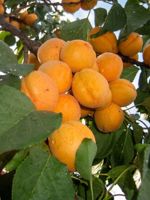
Capilano Apricot is a cold-hardy variety known for its sweet, juicy, full-flavored fruit. It produces white to pink blooms in early spring, before the leaves emerge, followed by golden-yellow, freestone apricots. They ripen from mid-July to early August and are well-suited for fresh eating, baking, wine, canning, and preserves.
The Capilano Apricot originated from three trees planted in Edmonton’s Capilano neighbourhood during the 1960s. As they began producing fruit, local fruit enthusiasts took notice and propagated the trees, with the southernmost becoming particularly popular. Though the original trees no longer exist, the Capilano Apricot remains a widely sought-after cold-hardy variety.
Capilano Apricot is generally considered self-pollinating, but planting with another variety for cross-pollination can increase yields.
Note: The early bloom time makes the flowers vulnerable to spring frosts, which can reduce or eliminate the fruit crop