 Owned
Owned

Evans Cherry vs Western Chokecherry
Prunus virginiana var. demissa
Prunus cerasus Evans
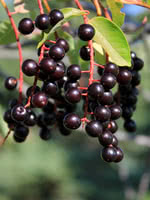
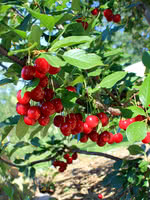
Western Chokecherry is a shrub or small tree commonly used for farmstead and field windbreaks.
It produces white flowers in the spring and edible dark purple fruit that matures between September and October. Its cherries are great for making for making jams, jellies or wine, but are not very palatable for raw eating.
Evans Cherry is a cold-hardy sour cherry tree that is typically highly productive. It produces bright red, tart fruit that are well suited to fresh eating, baking, and preserves. In the spring, beautiful white flowers cover the branches, adding ornamental value.
Evans Cherry was developed in Alberta. It was rediscovered in 1976 near Edmonton, AB, by Dr. Ieuan Evans.
Sour cherries are self-fertile; however, planting with additional varieties for cross-pollination can increase yields.
Western Chokecherry Quick Facts
Evans Cherry Quick Facts
Toxicity: toxic to horses, cattle, etc.)