 Owned
Owned

Walker Poplar vs Black Locust
Populus x Walker
Robinia pseudoacacia
NOT AVAILABLE THIS SEASON - MIGHT RETURN
NOT AVAILABLE THIS SEASON - MIGHT RETURN
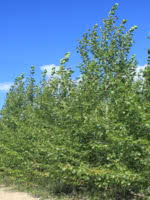
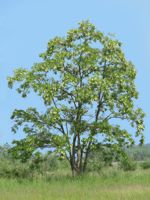
Walker Poplar is a hardy prairie tree. A common shade tree, this fast-growing hybrid poplar works well in urban yards or shelterbelts.
In the past, Walker was one of the most popular species used in shelterbelts due to the wide spread that reduced the total number and cost of trees to plant. Despite the fuzz produced by this tree in the Spring it continues to be a popular and cost effective tree for field shelterbelts.
Another benefit of this species is the low branching. It can serve as a first row species that traps snow drifts. This makes it uniquely useful as a shelterbelt tree over other varieties.
Walker is one of the fastest growing hybrid poplar varieties we grow.
Black Locust is an attractive tree. Its distinctive leaves are made of about a dozen bright green leaflets. It also notable for its fragrant white flowers, which smell of citrus.
Black Locust can grow in many situations, but prefers dry areas with lots of sun. It is robust and is an excellent choice for establishing shade in dry, open areas.
Important note: Much of the Black Locust is toxic to humans and livestock, including seeds, bark, and leaves.
Walker Poplar Quick Facts
Black Locust Quick Facts
In row spacing: 2.4 m (8 ft)