 Owned
Owned

Purpurea Plena Elegans Clematis vs Capilano Apricot
Clematis Purpurea Plena Elegans
Prunus Capilano
NOT AVAILABLE THIS SEASON - MIGHT RETURN
NOT AVAILABLE THIS SEASON - MIGHT RETURN
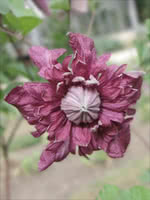
Purpurea Plena Elegans Clematis (P.P.E) is a stunning climbing vine. The flowers are double flowers, meaning they have an inner pompom surrounded by outer petals. They are distinct dusty rose colour with a long bloom time from mid-summer to early fall. They can remain on the vine for up to three weeks. It is durable and easy to maintain and train.
One of the oldest clematis cultivars, Purpurea Plena Elegans Clematis (P.P.E) is a winner of the Royal Horticultural Society's Award of Garden Merit.
The Purpurea Plena Elegans Clematis will attract pollinators to your yard or garden attracting butterflies and hummingbirds. Because it is a climbing species, support from a trellis or fence is recommended. New vines emerge from the ground, so pruning should be done in early spring.
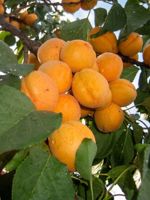
Capilano Apricot is a cold-hardy variety known for its sweet, juicy, full-flavored fruit. It produces white to pink blooms in early spring, before the leaves emerge, followed by golden-yellow, freestone apricots. They ripen from mid-July to early August and are well-suited for fresh eating, baking, wine, canning, and preserves.
The Capilano Apricot originated from three trees planted in Edmonton’s Capilano neighbourhood during the 1960s. As they began producing fruit, local fruit enthusiasts took notice and propagated the trees, with the southernmost becoming particularly popular. Though the original trees no longer exist, the Capilano Apricot remains a widely sought-after cold-hardy variety.
Capilano Apricot is generally considered self-pollinating, but planting with another variety for cross-pollination can increase yields.
Note: The early bloom time makes the flowers vulnerable to spring frosts, which can reduce or eliminate the fruit crop