 Owned
Owned

Honeywood Saskatoon (Serviceberry) vs Grouseberry
Amelanchier alnifolia Honeywood
Vaccinium scoparium
NOT AVAILABLE THIS SEASON - MIGHT RETURN
CUSTOM GROW
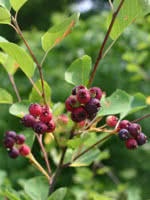
Honeywood Saskatoon, also known as Serviceberries, is excellent at producing an abundance of blue-coloured berries in mid-summer and has dark green foliage that turns yellow in the fall. It is quite large making it a perfect shrub in your backyard garden. Often grown for its edible qualities, the Honeywood Saskatoon is quite ornamental with stunning white blooms in the spring.
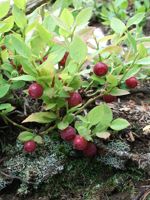
Grouseberry is a native, low-growing deciduous shrub known for its edible red berries. In early summer, it produces small, urn-shaped flowers ranging from white to pink that attract bees and other pollinators. The berries provide an important food source for many types of wildlife, including game birds such as grouse, which gives the plant its common name. People can also enjoy the berries fresh or in baked goods, though they can be difficult to harvest in large quantities.
Spreading by rhizomes, Grouseberry forms dense, broom-like mats that help stabilize soil and prevent erosion, while also providing cover for ground-nesting wildlife. It is commonly found beneath conifers in open forests, subalpine meadows, and occasionally on rocky slopes in mountainous regions. It is well-suited for naturalization, ecological restoration, and soil stabilization projects.