 Owned
Owned

Wayfaring Tree vs Lewis Mock Orange
Viburnum lantana
Philadelphus lewisii
CUSTOM GROW

Wayfaring Tree is an adaptable and reliable shrub. It is prized for its ornamental berries that can range in color from red to yellow to black. Consider getting two trees as fruiting is maximized when another Wayfaring Tree is present.
This species has a variety of uses ranging from naturalization, mass planting, borders, and privacy screens.
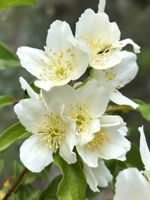
Lewis Mock Orange is a flowering ornamental shrub that produces an abundance of white, fragrant blooms. The flowers have a sweet scent similar to orange blossoms, with a hint of pineapple. They bloom for several weeks from late spring to early summer, attracting pollinators and other beneficial insects.
Native to North America, Lewis Mock Orange is found from the southernmost portions of Alberta and British Columbia, and south into the northwestern United States. It makes an attractive shrub and can be used in hedgerows, pollinator gardens, and naturalization projects. Blooms occur on the previous year’s wood, so it is recommended to prune after it has finished flowering.