 Owned
Owned

Mon-Fri 9am - 5pm Mountain time
Cart reopens in October
Subscribe to our email list
to stay updated
Gray Dogwood vs Bilberry
Cornus racemosa
Vaccinium myrtillus
CUSTOM GROW
CUSTOM GROW
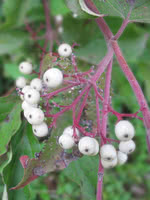
Gray dogwood is a thicket-forming, deciduous shrub with greenish-white blossoms in open, terminal clusters. Young twigs are red and the fruit pedicels remain conspicuously red into late fall and early winter.
Fruit itself is a white, 1/4 in. drupe that usually does not remain on the shrub for long.
Great for naturalizing wild areas, this shrub attracts birds and other wildlife.
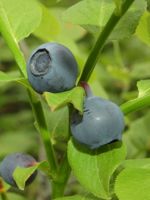
Bilberry is a native perennial shrub valued for its small, blue-black berries that ripen in mid to late summer. The berries resemble blueberries but have a richer, more tart, and intense flavor. They have long been used for fresh eating, baking, and preserves, while also providing food for birds and mammals. In spring, its delicate pinkish flowers attract bees and other pollinators.
Growing low to the ground, Bilberry forms spreading colonies that create dense understory cover. This growth habit provides food and shelter for wildlife, and its foliage adds seasonal interest by turning red to purple in autumn. With its adaptability and ecological benefits, Bilberry is well-suited for naturalization, ecological restoration, and pollinator gardens.
Gray Dogwood Quick Facts
Bilberry Quick Facts
Toxicity: leaves may be unsafe in high doses