 Owned
Owned

Mon-Fri 9am - 5pm Mountain time
Cart reopens in October
Subscribe to our email list
to stay updated
Borealis Haskap (Honeyberry) vs Korean Boxwood
Lonicera caerulea Borealis
Buxus microphylla Koreana
COMING SOON
(new stock expected: fall of 2026)
CUSTOM GROW
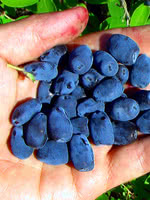

Borealis Haskap is a popular variety due to its great-tasting, sweet-tart berries. The flavour of Haskaps is generally described as a cross between a blueberry and a raspberry. Borealis Haskaps are well suited to fresh eating, baking, and preserves.
It has strong fruit holds and is not very firm so it does not do well when handled by equipment. This variety is a favourite for home gardens and U-Picks.
For optimal fruit production, cross-pollination is required. Haskaps need to be planted with a compatible variety. Compatibility is influenced by both bloom time and genetics.
Borealis Haskap is an early-pollinating variety and pairs well with Aurora and Honey Bee.
Korean Boxwood is a vibrant evergreen shrub. A top choice for colder climates, this shrub will look stunning lining a driveway or as a foundation plant.
Easy to root in and maintain, Korean Boxwood's thick foliage is deer resistant and turns an attractive yellow-brown to purplish in winter. Consider applying mulch around the base to keep the roots moist and cool.