 Owned
Owned

Mon-Fri 9am - 5pm Mountain time
Cart reopens in October
Subscribe to our email list
to stay updated
Honey Bee Haskap (Honeyberry) vs Cherry Prinsepia
Lonicera caerulea Honey Bee
Prinsepia sinensis
NOT AVAILABLE THIS SEASON - MIGHT RETURN
CUSTOM GROW
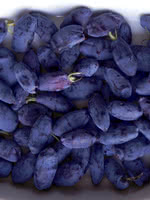
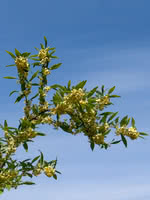
Honey Bee Haskap produces tarter fruit than the Aurora and Borealis varieties and is known for bearing fruit at a younger age. The flavour of Haskaps is generally described as a cross between a blueberry and a raspberry. Honey Bee Haskaps are well suited to fresh eating, freezing, baking, and preserves.
The Honey Bee Haskap has stronger fruit holds than other varieties so the berries stay on the bush longer. The berries do not roll well so they are not recommended for mechanical harvesting.
For optimal fruit production, cross-pollination is required. Haskaps need to be planted with a compatible variety. Compatibility is influenced by both bloom time and genetics.
Honey Bee Haskap is an early-pollinating variety and pairs well with Aurora, Borealis, Tundra, and Indigo Gem.
Cherry Prinsepia is an attractive, cold hardy shrub with thorny stems and a rounded shape.
Primarily used for its shrub and hedge characteristics, Cherry Prinsepia is also grown for its ornamental fruit. Tart in flavor, the red berries are edible and enjoyed by birds and humans alike.
If deer are an issue on your property, try planting Cherry Prinsepia in a tight row to create a dense hedge to deter them.