 Owned
Owned

Russian Almond vs Ussurian Pear (Siberian)
Prunus tenella
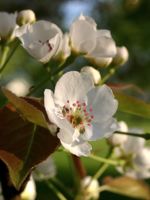
Pyrus ussuriensis
NOT AVAILABLE THIS SEASON - MIGHT RETURN
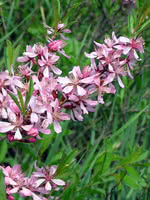
Russian Almond is a low maintenance, short, slightly suckering shrub. It is covered with attractive, bright pink flowers in early spring before its foliage emerges.
This hardy species forms dense thickets attracts wildlife. Russian Almond prefers full sun and well-drained soils, but can tolerate moist soils.
The nuts it produces are quite attractive but very small. They are bitter and possibly toxic in large quantities.
Check out our YouTube channel video of the Russian Almond here.
Ussurian Pear is the most cold hardy of all pear species. It is frequently used as a rootstock or as a pollinizer for other pear varieties. The pinkish-white flowers that bloom in the spring and the striking fall colours make it well-suited as an ornamental addition to your landscape.
Ussurian Pear can also be used for forming hedges as it tends to branch quite low.
While the Ussurian Pear is considered self-pollinating, planting with another pear variety will increase yields. Can be paired with Krazulya Pear or Beedle Pear.