 Owned
Owned

Mon-Fri 9am - 5pm Mountain time
Cart reopens in October
Subscribe to our email list
to stay updated
Amur Cherry vs American Sycamore
Prunus maackii
Platanus occidentalis
NOT AVAILABLE THIS SEASON - MIGHT RETURN
NOT AVAILABLE THIS SEASON - MIGHT RETURN
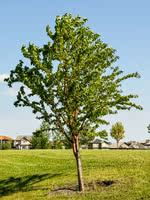
Amur Cherry is a beautiful, fast-growing ornamental tree. It features attractive bronze/red bark that peels horizontally in strips.
This hardy tree bears white flowers in the spring, black fruit held in clusters in the late summer, and pointy leaves that turn yellow in the fall.
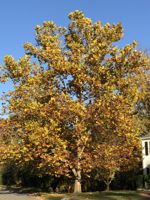
American Sycamore is the largest tree native to eastern North America. Generally too large and messy to be a street tree, American Sycamore thrives in large, open spaces, such as an acreage or farm.
The bark is one of the main features that draw people to this tree. The outer bark flakes off in irregular pieces to reveal an attractive white, green, and cream colored inner layer, providing winter interest.
American Sycamore has an extremely fast growth rate, gaining up to 6 ft in one year, and will easily reach its mature height in a short period of time. Be wary of this trees' root system, as it's typically very extensive and needs lots of room to expand.
Amur Cherry Quick Facts
American Sycamore Quick Facts
Toxicity: toxic to horses, cattle, etc.)