 Owned
Owned

Mon-Fri 9am - 5pm Mountain time
Cart reopens in October
Subscribe to our email list
to stay updated
Manchurian Lilac (Korean Lilac) vs Aronia Berry
Syringa pubescens ssp. patula
Aronia melanocarpa
NOT AVAILABLE THIS SEASON - MIGHT RETURN
NOT AVAILABLE THIS SEASON - MIGHT RETURN
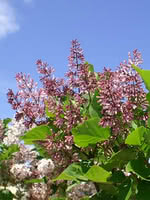
Manchurian Lilac (aka Korean Lilac) is a medium-sized shrub that features fragrant clusters of pale purple flowers in late spring.
Manchurian Lilac is less affected by disease than other lilacs and will create a beautiful border, hedge, or privacy screen. If you are looking for a lilac for your shelterbelt, consider Common Purple Lilac or Villosa Lilac first.
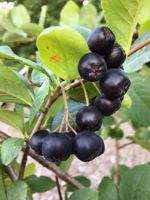
Aronia Berry produces black fruit that is often considered too astringent. This is why they are also referred to as Black Chokeberry. It is native to Eastern Canada and the Eastern United States. White to pink flowers appear in the spring which provides a nice contrast to the dark green foliage. In fall the leaves turn a vibrant orange to red.
It has a fast growth rate, strong roots, and can tolerate growing in wet soils. This makes it well suited for various projects including forming hedges, bank stabilization, erosion control, and in wetter riparian areas. They are also well suited as an understory plant as it grows well under other trees.
Aronia berries have their own unique flavour. The polyphenols and anthocyanins are touted as healthy antioxidants and lots of research seems to be underway on the health benefits of this fruit.