 Owned

Virginia Creeper vs Northern Catalpa (Cigar Tree)
Catalpa speciosa
Parthenocissus quinquefolia
NOT AVAILABLE THIS SEASON - MIGHT RETURN
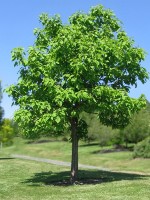
Northern Catalpa is a striking feature tree with showy flowers, and very large leaves. Its orchid-like flowers are white with yellow and purple accents, and they have a pleasant fragrance. They bloom from late spring to early summer and can last up to two weeks, attracting hummingbirds and pollinators. The leaves are very large, ranging from 15-30 cm long, 12-20 cm wide, forming a canopy that makes it a good shade tree.
They can tolerate dry conditions as well as standing water, air pollution, and salt. These factors and its beauty contribute to its growing popularity as both a boulevard and ornamental tree in colder areas.
Northern Catalpa produces long bean-like capsules and are sometimes called the Cigar Tree in reference to this fruit.
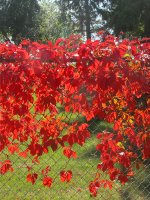
Virginia Creeper is a fast-growing, climbing vine. Its root-like tendrils attach themselves to any non-smooth surface, even brick, but will also grow as a ground cover.
Virginia Creeper makes a beautiful ornamental plant for your garden; its attractive foliage turns from green to deep red in the fall. Birds will love its red berries.
Please note: All parts of this plant are considered poisonous.
Northern Catalpa (Cigar Tree) Quick Facts
Virginia Creeper Quick Facts
Toxicity: berries are toxic