Owned
Owned

Mon-Fri 9am - 5pm Mountain time
Cart reopens in October
Subscribe to our email list
to stay updated
How to Plant a Seedling: Planting Guide
show all planting questionsMake sure you follow the How should I care for my trees before I plant them? instructions to give your seedlings a good start before they even go in the ground. When you're ready to start planting, follow these simple steps for success!
-
Dig Your Hole
- For a peat plug seedling, the hole needs to be at least big enough to accommodate the plug.
- For a bareroot seedling, the hole needs to be big enough to be able to arrange the roots naturally in the hole. The root balls are generally larger, so bigger holes will be needed to accommodate.
- Loose, mixed soil for a few inches in all directions is ideal.
-
Fertilize (optional)
- Most soil contains adequate nutrients for the native plants we produce. However, you may add bone meal at the bottom of the hole to enhance root growth.
- Take it easy on additional fertilizer. In many cases, high-nitrogen fertilizers are too much for young plants.
-
Plant
-
Remove the plastic wrap or elastic band and separate the bundle. Place the seedling in the hole with the stem standing
straight up and with the root collar at ground level. Be sure that the first branches of the seedling are not covered.
- For a peat plug seedling, ensure that the plug is not bent or curved and that there is no space between the bottom of the plug and the earth below.
- For a bareroot seedling, ensure that the roots are spread out and arranged in a natural downward orientation, not curled around the bottom or pointing back at the surface.
-
Remove the plastic wrap or elastic band and separate the bundle. Place the seedling in the hole with the stem standing
straight up and with the root collar at ground level. Be sure that the first branches of the seedling are not covered.
-
Water And Fill The Hole
- Moisten the soil and fill your hole back in around the roots.
- Press firmly on the soil around the stem.
- The roots should be completely covered.
-
Water The Area
- Water thoroughly after planting, but do not drown your tree if the soil is poorly drained. Stop before standing puddles form.
- Seedlings should be run through a wet-and-dry soil cycle. Allow the soil to dry down before watering again.
- It may be 2-3 years before a tree or shrub can find moisture on its own. Until then it's up to you. Many trees and shrubs like moist soil, but none like it continuously wet.
-
Protect Your Trees From Pests
- You may need to take special precautions to keep deer, rabbits, mice, and other pests away from your trees.
-
Dig Your Hole
- For a peat plug seedling, the hole needs to be at least big enough to accommodate the plug.
- For a bareroot seedling, the hole needs to be big enough to be able to arrange the roots naturally in the hole. The root balls are generally larger, so bigger holes will be needed to accommodate.
- Loose, mixed soil for a few inches in all directions is ideal.
-
Fertilize (optional)
- Most soil contains adequate nutrients for the native plants we produce. However, you may add bone meal at the bottom of the hole to enhance root growth.
- Take it easy on additional fertilizer. In many cases, high-nitrogen fertilizers are too much for young plants.
-
Plant
-
Remove the plastic wrap or elastic band and separate the bundle. Place the seedling in the hole with the stem standing
straight up and with the root collar at ground level. Be sure that the first branches of the seedling are not covered.
- For a peat plug seedling, ensure that the plug is not bent or curved and that there is no space between the bottom of the plug and the earth below.
- For a bareroot seedling, ensure that the roots are spread out and arranged in a natural downward orientation, not curled around the bottom or pointing back at the surface.
-
Remove the plastic wrap or elastic band and separate the bundle. Place the seedling in the hole with the stem standing
straight up and with the root collar at ground level. Be sure that the first branches of the seedling are not covered.
-
Water And Fill The Hole
- Moisten the soil and fill your hole back in around the roots.
- Press firmly on the soil around the stem.
- The roots should be completely covered.
-
Water The Area
- Water thoroughly after planting, but do not drown your tree if the soil is poorly drained. Stop before standing puddles form.
- Seedlings should be run through a wet-and-dry soil cycle. Allow the soil to dry down before watering again.
- It may be 2-3 years before a tree or shrub can find moisture on its own. Until then it's up to you. Many trees and shrubs like moist soil, but none like it continuously wet.
-
Protect Your Trees From Pests
- You may need to take special precautions to keep deer, rabbits, mice, and other pests away from your trees.
Read through our full Pre-Planting and Planting Guide here.
Want more? Watch this helpful video Unboxing Your TreeTime.ca Order or read more on our blog article here. Check out our YouTube Channel for more information, helpful tips, plants we meet in the wild, and behind the scenes of our operations.
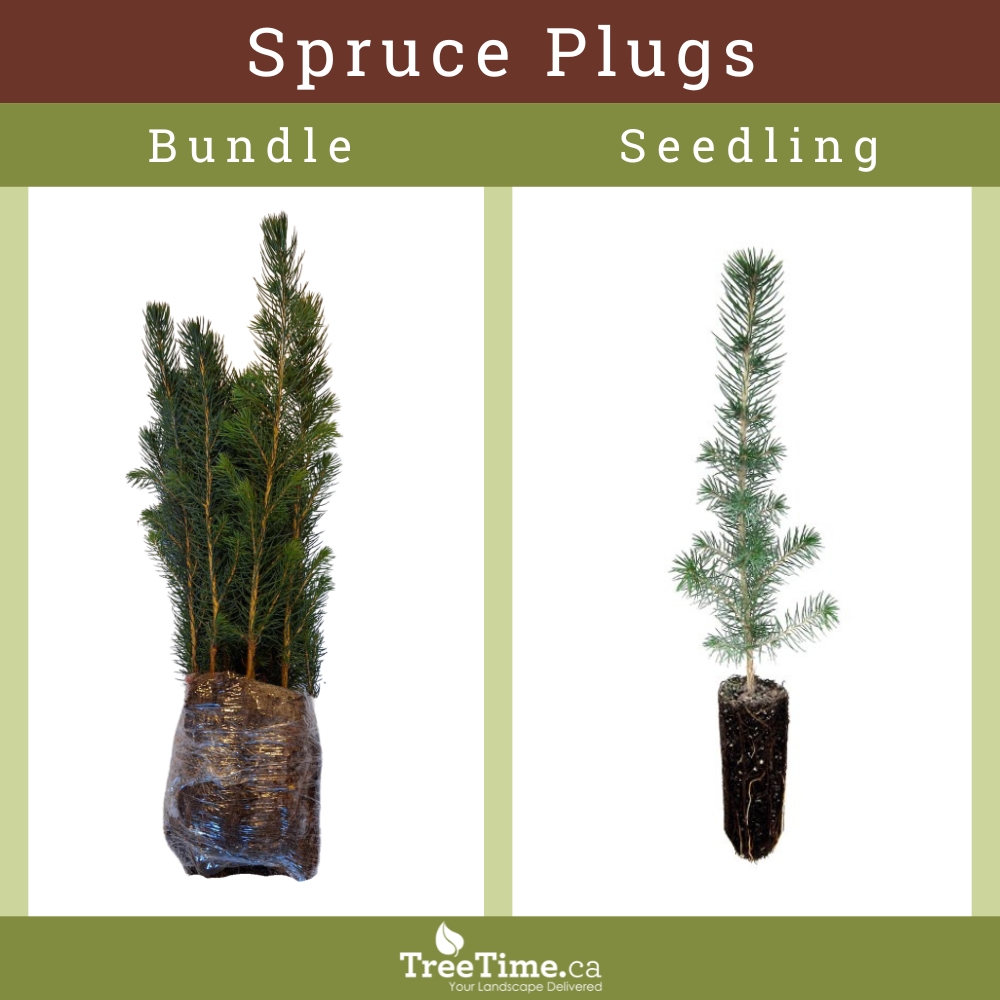
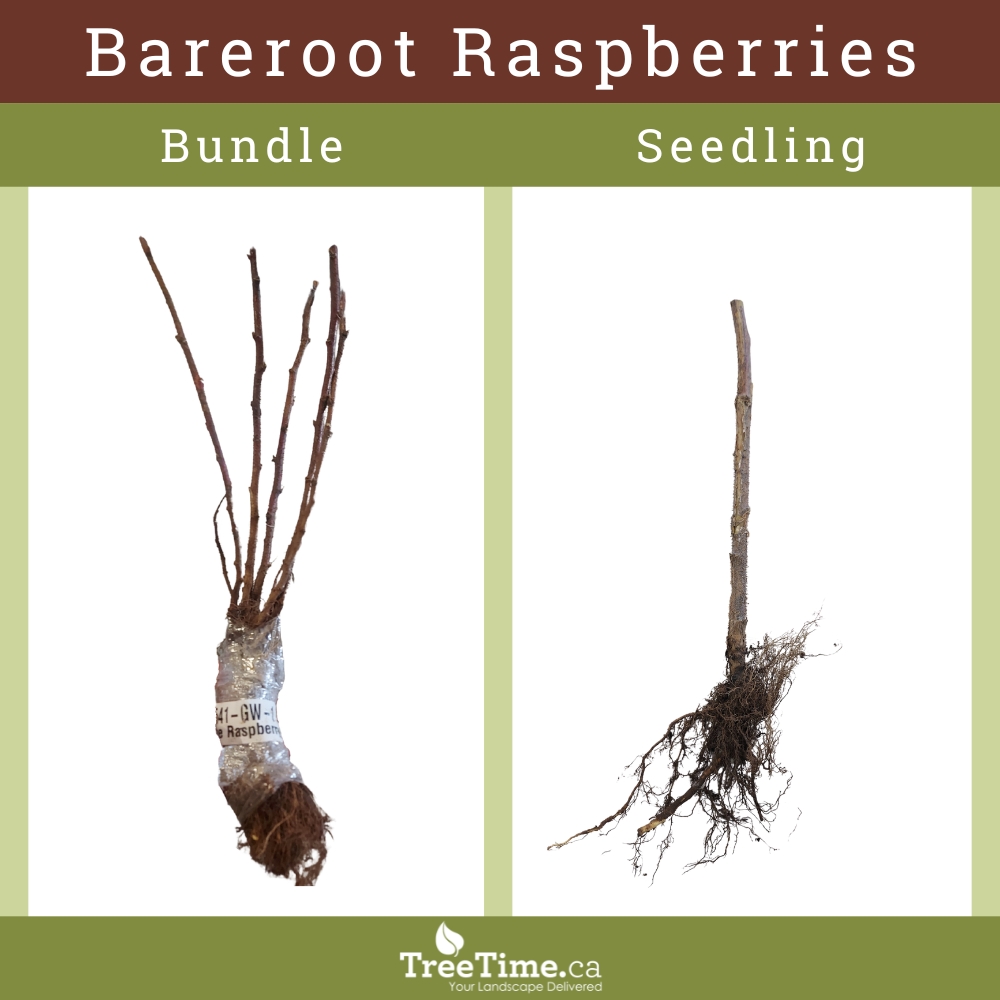
Here are some examples of what you can expect from your order:
OUR GUARANTEE
If you follow the Pre-Planting and Planting Guides, we guarantee that your trees will put on new growth within 30 days of planting, or we'll give you store credit for the value of those trees (due to availability and shipping scheduling, replacement stock can not be issued in the same growing year). Contact us immediately to report damaged, unhealthy, or missing trees. For more details on our guarantee and making a claim, please visit our website.
Need Help? Contact our team 1-844-873-3700 or support@treetime.ca
Related Questions:
- How to fertilize a new tree
- How to plant a shelterbelt
- Where do your seedlings come from?
- What species are safe to plant near my house?
This question has the following tag: planting
What will you find at TreeTime.ca?
A huge assortment of trees, shrubs, and berry seedlings at prices garden centers, tree farms, and plant nurseries just can't match.
Don't know where to start?
Read our how to order page.