 Owned
Owned

Sour Cherry vs Klondike Amur Cherry
Prunus cerasus
Prunus maackii Jefdike
NOT AVAILABLE THIS SEASON - MIGHT RETURN
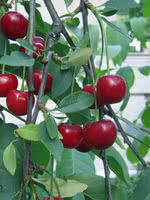
Sour Cherry is cold-hardy and typically grows as a small tree. In late spring, it produces clusters of fragrant white blossoms that mature into bright red, tart fruit. Although the cherries can be eaten fresh, they are most commonly used in baking and preserves.
While not native to North America, Sour Cherry serves as a larval host plant for the Eastern Tiger Swallowtail (Papilio glaucus), a butterfly native to eastern North America.
Sour cherries are self-fertile; however, planting near additional cherry trees for cross-pollination can increase yields.
This Sour Cherry is produced from seed collected from an Evans Cherry and is not clonally reproduced.
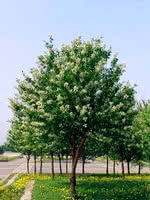
The Klondike Amur Cherry is an attractive cultivar which features showy, peeling gold bark and textured oval leaves that turn bright yellow in fall. It blooms with fragrant white flowers in mid spring, and produces tiny, tart black berries through the summer. The Klondike Amur Cherry was bred to have improved stem strength and stronger branching.
This tree makes a great addition to urban gardens and commercial planting, and is immune to black knot.