 Owned
Owned

Mon-Fri 9am - 5pm Mountain time
Cart reopens in October
Subscribe to our email list
to stay updated
Sour Cherry vs Krazulya Pear
Prunus cerasus
Pyrus Krazulya
COMING SOON
(new stock expected: fall of 2026)
COMING SOON
(new stock expected: fall of 2026)
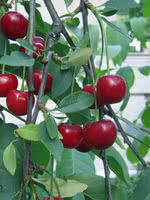
Sour Cherry is cold-hardy and typically grows as a small tree. In late spring, it produces clusters of fragrant white blossoms that mature into bright red, tart fruit. Although the cherries can be eaten fresh, they are most commonly used in baking and preserves.
While not native to North America, Sour Cherry serves as a larval host plant for the Eastern Tiger Swallowtail (Papilio glaucus), a butterfly native to eastern North America.
Sour cherries are self-fertile; however, planting near additional cherry trees for cross-pollination can increase yields.
This Sour Cherry is produced from seed collected from an Evans Cherry and is not clonally reproduced.
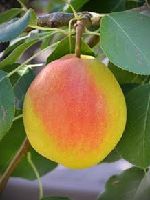
Krazulya Pear was developed in Russia and is said to be one of the most delicious and hardiest pears. The fruit is juicy and buttery, with a slight spice undertone.“Krazulya” - meaning “beauty” in Russian - is true to its name in that the pears are a luscious yellow with bright, red cheeks.
Krazulya Pears are unique as they can be eaten directly off the tree and don’t need time to ripen. The downside is that the pears only keep for 1-2 weeks.
For fruit production, another pear variety is required for cross-pollination. Can be paired with Beedle Pear or Ussurian Pear.