 Owned
Owned

Northland Blueberry vs Blue Treasure Haskap (Honeyberry)
Vaccinium corymbosum Northland
Lonicera caerulea Blue Treasure
NOT AVAILABLE THIS SEASON - MIGHT RETURN
NOT AVAILABLE THIS SEASON - MIGHT RETURN
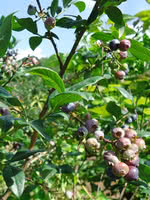

Northland Blueberry is the hardiest of the half-high highbush blueberries. It's also the best looking. In fact, it is frequently planted as an ornamental. Northland Blueberry produces large quantities of medium-size berries that taste amazing but are on the softer side, which matters to some people.
You must also prune Northland Blueberry to maintain its health and productivity.
Note: Blueberries require very specific soil conditions. They need well-drained soil with a pH between 4.5 and 5.0. If the starting pH of your soil is between 5.1 and 6.2 you can lower it by adding sulfur. We recommend against planting blueberries in soil with a starting pH greater than 6.2. Please do your own research before buying any blueberry plants.
Blue Treasure Haskap is a late season cultivar, ideal for cooler climates, and a favorite from Berries Unlimited. The berries are delectably sweet and ideal for fresh eating, but can also be made into jam, juice, and wine.
Blue Treasure is a late pollinating variety. Pair with other late pollinators to have a higher yield.
Kawai is a great companion variety.