 Owned
Owned

Mon-Fri 9am - 5pm Mountain time
Cart reopens in October
Subscribe to our email list
to stay updated
Northern Pin Oak vs Burton Hican
Quercus ellipsoidalis
Carya ovata x illinoinensis Burton
NOT AVAILABLE THIS SEASON - MIGHT RETURN
NOT AVAILABLE THIS SEASON - MIGHT RETURN
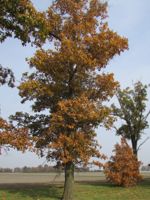
Northern Pin oak has an attractive but irregular rounded crown with lower hanging branches. This species is one of the few oak species recommended for the prairies and colder areas. Northern Pin Oak prefers drier habitats.
The spectacular fall leaf color of this tree is the primary reason for its popularity. Fall leaves turn orange and red to reddish brown.
Squirrels, jays, deer, and similar animals love its acorns.
Note: Most Oak species can be considered toxic for many animals.
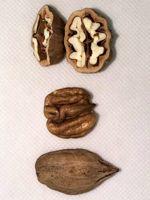
Burton Hican is a rare cross between Shagbark Hickory and Pecan. Most Hickory x Pecan hybrids are not reliable producers but the Burton Hican produces large crops annually (in warmer climates). The medium sized nuts fall in between the Pecan and Hickory and are known for having a great flavor. They are well suited to fresh eating, cooking, and baking with a good storage life.
Hicans will carry features from both species. The Hickory influence causes earlier ripening times while the taste and productivity come from the Pecan. The Pecan genetics also cause the nuts to have a thinner shell that is easier to crack and the pecan-like shape makes kernel removal easier.
The Burton Hican is generally considered self pollinating but having a second variety for cross pollination will increase nut production. They have been known to cross pollinate with other Hicans, Shagbark Hickory, and some Pecans. Nut production is expected after 7-10 years.
Note: Plant this tree once. Due to its large tap root transplanting is not recommended.