 Owned
Owned

Mon-Fri 9am - 5pm Mountain time
Cart reopens in October
Subscribe to our email list
to stay updated
Northern Pin Oak vs Frank Hazelnut
Quercus ellipsoidalis
Corylus avellana Frank
NOT AVAILABLE THIS SEASON - MIGHT RETURN
NOT AVAILABLE THIS SEASON - MIGHT RETURN
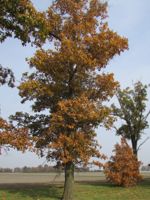

Northern Pin oak has an attractive but irregular rounded crown with lower hanging branches. This species is one of the few oak species recommended for the prairies and colder areas. Northern Pin Oak prefers drier habitats.
The spectacular fall leaf color of this tree is the primary reason for its popularity. Fall leaves turn orange and red to reddish brown.
Squirrels, jays, deer, and similar animals love its acorns.
Note: Most Oak species can be considered toxic for many animals.
The Frank Hazelnut produces nuts that are medium size and ripen mid August. This is one of the best eating hazelnuts for cold climates. It is a medium size deciduous tree from Saskatchewan, Canada. It is a productive tree that has been tested as both a pollinizer and a main crop cultivar for colder climates. The Frank Hazelnut is one of the cold hardiest hazelnut trees on the market and known to be resistant to eastern filbert blight.
Not all hazelnuts pollinate with each other so it is important to pick the correct pollination pairs. Two compatible varieties of hazelnut are required to produce nuts. Nuts will only be produced once maturity is reached, around 2-3 years.